
The work
Where to play, how to win and a company built to keep it.
The problem
Your strategy is sound. The intent is clear. Then the company starts to move, and something slips.
Decisions that used to be quick now wait on committees. Teams read the same strategy differently. What worked in one market doesn’t translate to the next. What you decided and what the company can deliver at scale have come apart.
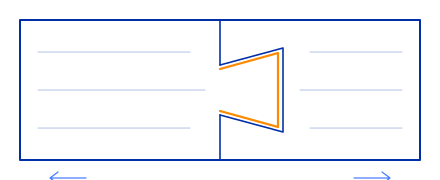
They come apart at the joins in the operating model: the decision points, handoffs and ways of working that carry a strategy to the customer.
When it holds, good decisions keep getting made by people you will never be in the room with. When it doesn’t, you become the bottleneck.
Who it’s for
For marketing leaders at established consumer brands who have to prove growth, and for the CEOs and boards they answer to.
The brand is respected, but it has lost its edge.
- Each year the plan needs more paid reach to hold the same number.
- Every team hit its number. The customer still left.
- AI assistants describe the brand by what customers wrote about the delivery, not by what you promised.
- The last agency or consultancy left and took the know-how with it.
- The board wants a growth story it can believe for longer than a year.
What I build
A strategy built on what you own, and a company that can carry it.
01
The diagnosis
A few weeks, and a clear read of what the brand owns, what it rents and where the promise breaks between departments, taken from what your customers wrote there: the record AI now reads. You leave with the few levers that matter, what fixing them is worth and the case to take to your board.
You can stop here.
02
The evidence
The bets tested in the market before anyone commits the budget: pilots designed, run and read properly, so the next decision rests on what happened rather than on what everyone hoped would happen.
You can stop here.
03
The blueprint
Where to play, how to win and the operating model that keeps the promise at every join, drawn in enough detail to build from: who decides what, and where.
You can stop here.
04
The build
The system built inside your teams and running without me. What you build keeps working after its builders leave.
Stop at any gate
Start with the diagnosis. Stop whenever you have what you need. Go further only if the diagnosis says you should.
Every stage stands on its own. The answer to consultants who never leave is built into the structure itself.
How the work is shaped
Built to reduce dependency.
The shape follows the problem. What stays constant: the capability stays with you. The diagnosis measures this from the start: which decisions still need one particular person, and what it costs you when they are not there. If you still need me at the same intensity a year in, something has gone wrong.
- 10% algorithms
- 20% data and technology
- 70% people, processes, culture
Why now
70%
AI reads what your customers say as well as what you claim. Where the delivery falls short of the promise, it believes the customers.
The companies getting the most from AI put most of their effort into people and processes: “They dedicate 10% of their efforts to algorithms; 20% to data and technology; and 70% to people, processes, and cultural transformation.” BCG, January 2025
That 70% is where I work: how the company keeps its promise at every join, built to keep running after I leave.
What it costs to find out
Less than you think.
There are five ways in, and only two of them commit you to reading the whole system. The first conversation is free.
or write to hello@oximepartners.com